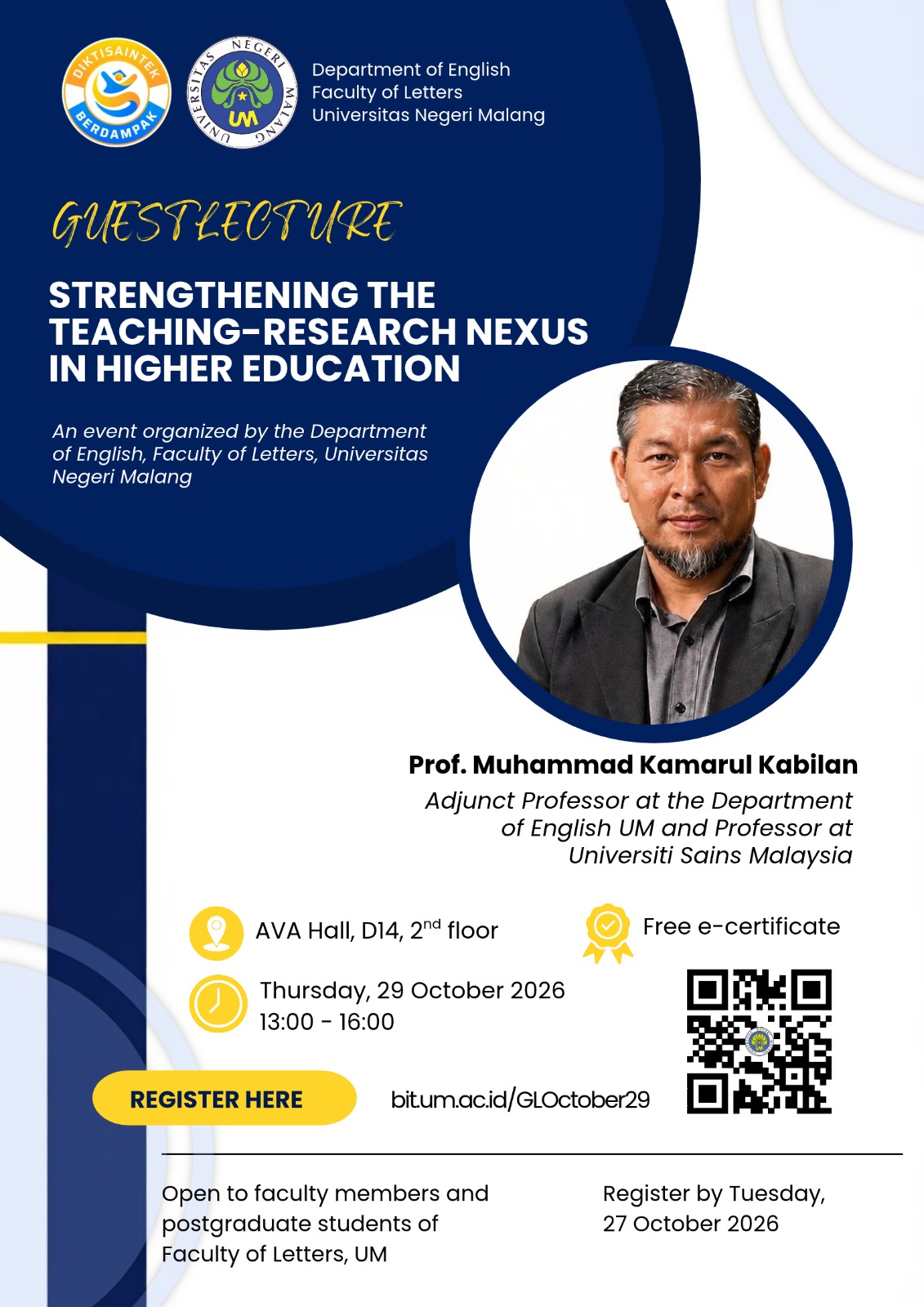
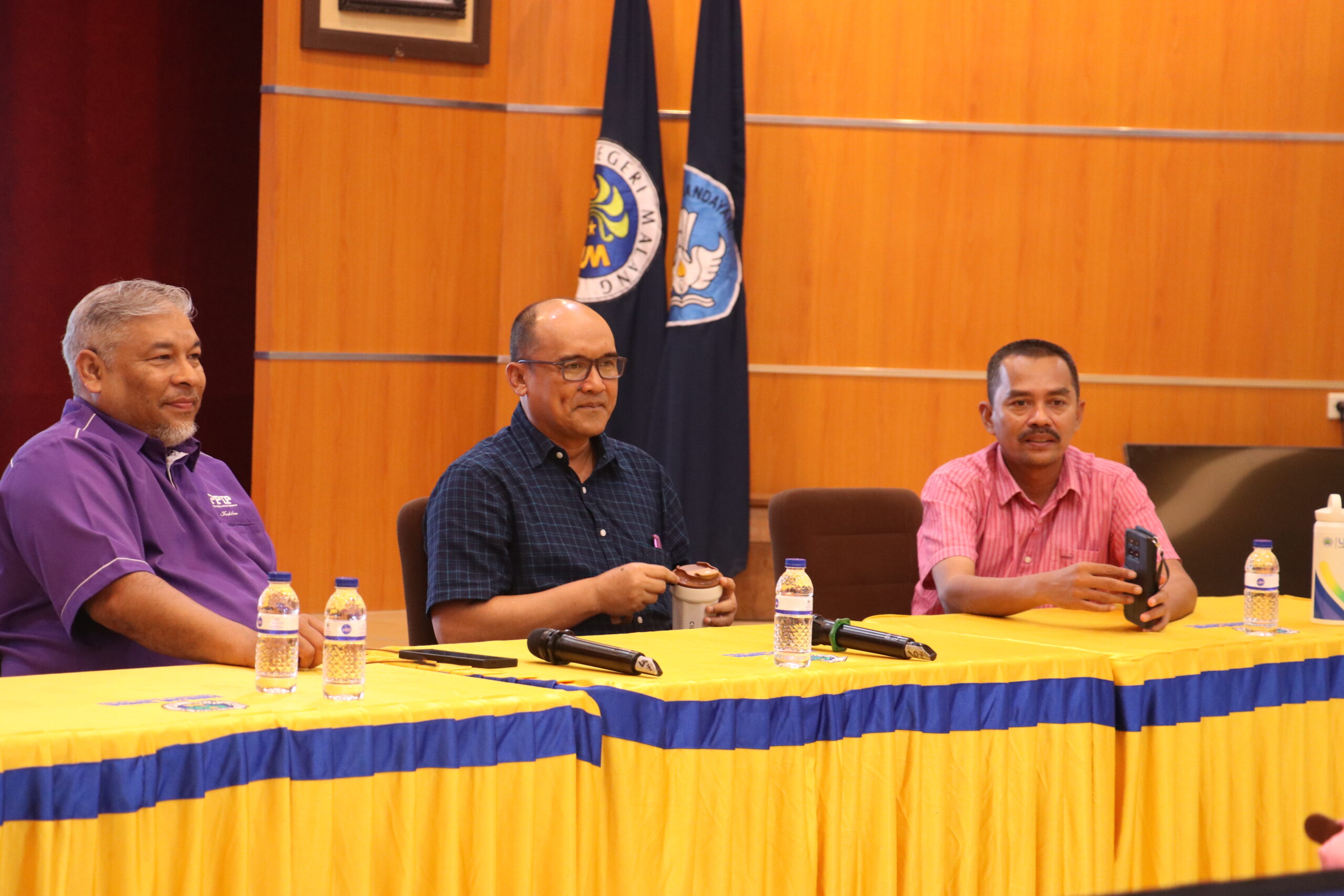
Malang, 29 October 2026 — The Department of English, Faculty of Letters, Universitas Negeri Malang (UM), organized an international guest lecture entitled “Strengthening the Teaching–Research Nexus in Higher Education” on Thursday, 29 October 2026, at AVA Hall, D14 Building, Faculty of Letters, UM.
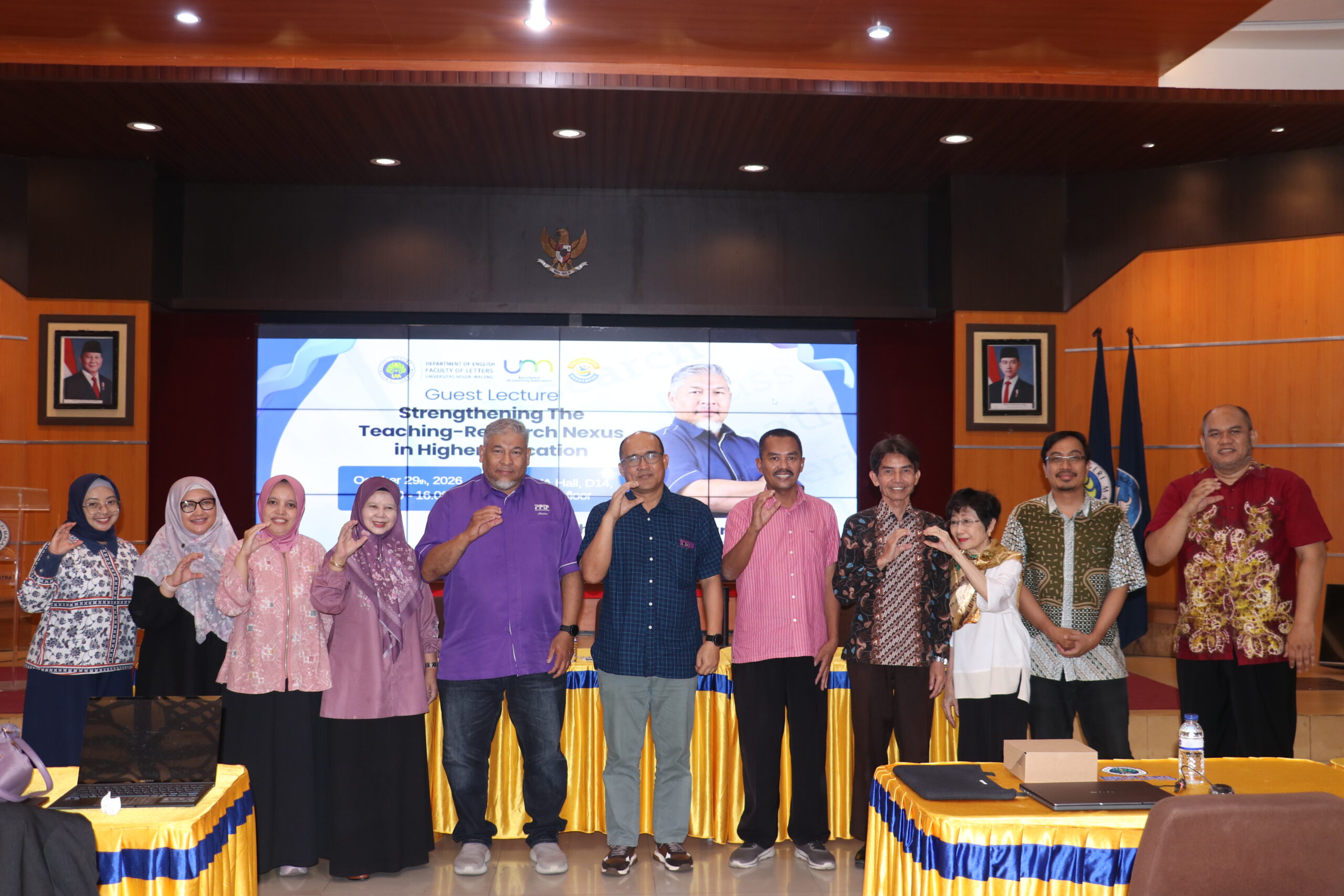
The lecture featured Prof. Muhammad Kamarul Kabilan, a professor at Universiti Sains Malaysia (USM) and an adjunct professor at the Department of English, Universitas Negeri Malang. The event was organized as part of the Department’s efforts to enhance academic excellence, strengthen research-informed teaching practices, and support UM’s ongoing transformation towards becoming a research university. The program provided an opportunity for faculty members and postgraduate students to explore how teaching and research can be meaningfully integrated to improve learning experiences, promote academic innovation, and increase the societal impact of higher education.
Bridging Teaching and Research in Higher Education
In his presentation, Prof. Kabilan emphasized that teaching and research should not be regarded as separate academic responsibilities. Instead, both should complement and reinforce each other in advancing knowledge creation, student development, and institutional excellence. He highlighted several reasons why teaching remains essential in a research-oriented university. Beyond disseminating knowledge, teaching develops future researchers, introduces students to current research, encourages critical reflection among academics, and extends the impact of research to wider communities.
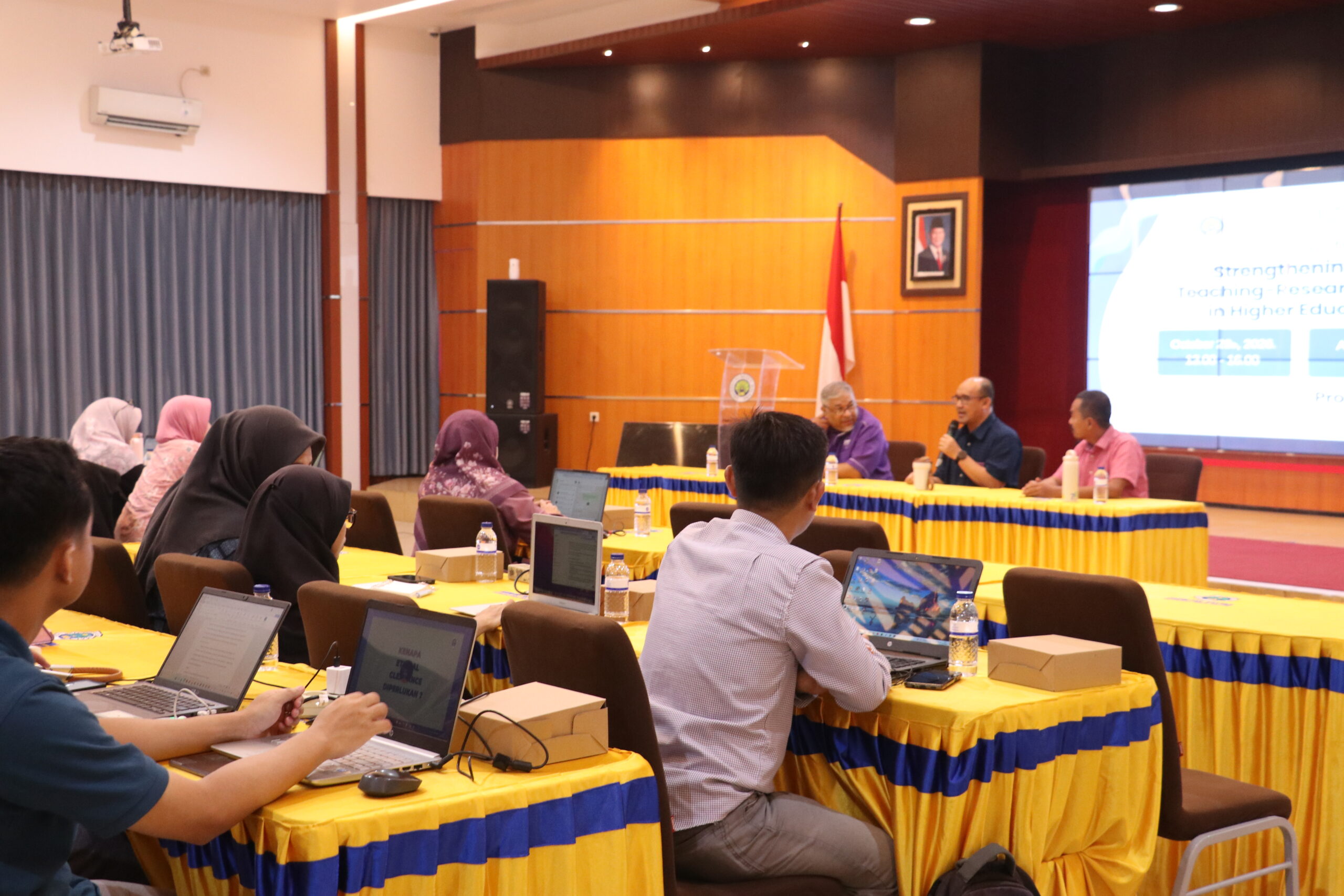
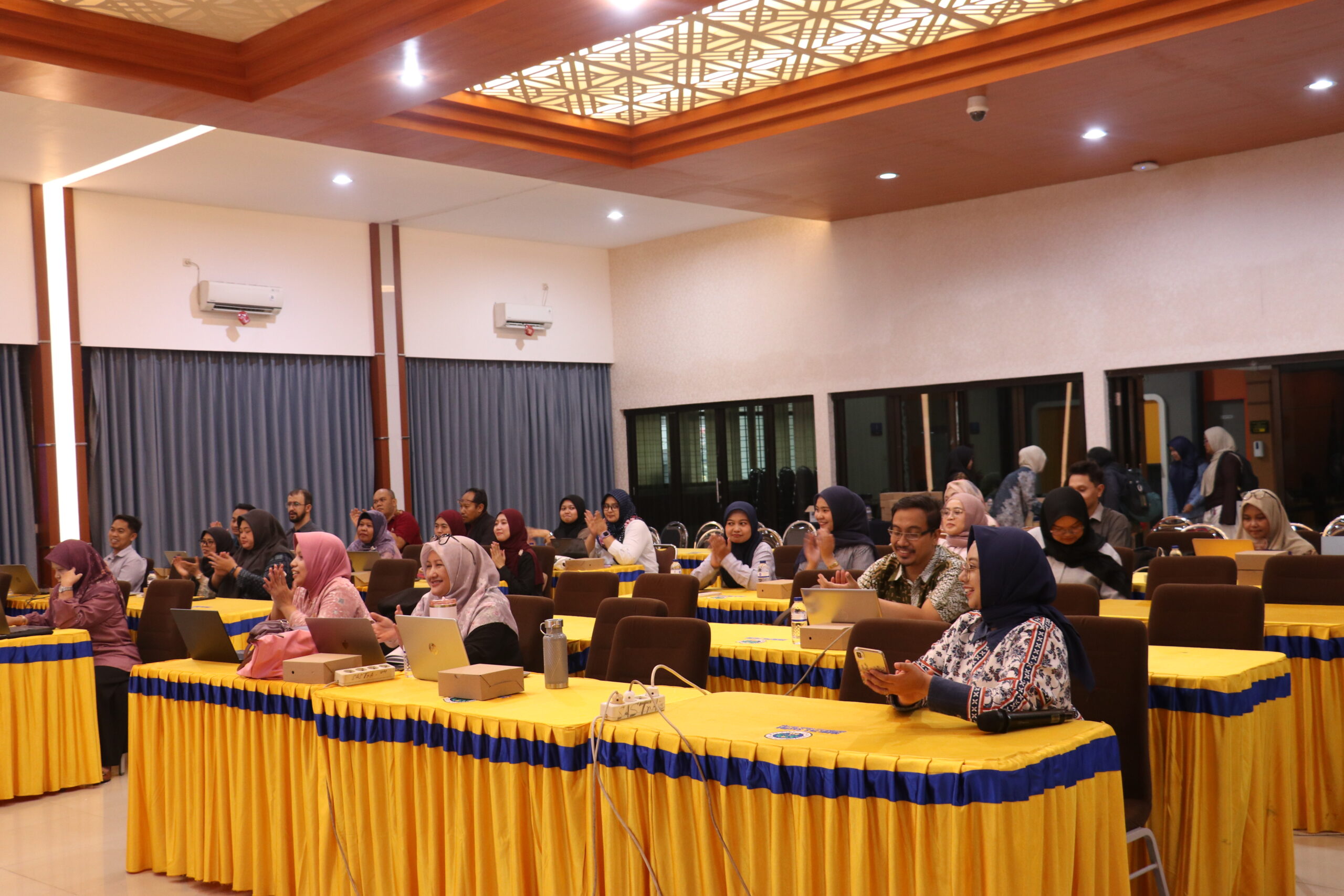
Drawing on his academic experiences at Universiti Sains Malaysia, Prof. Kabilan illustrated how classroom activities, project-based learning, and student assignments can generate meaningful research outcomes, including scholarly publications and educational innovations. He shared examples of research publications originating from undergraduate assignments, teaching practicums, postgraduate coursework, and collaborative classroom projects. These examples demonstrated that teaching activities can become productive spaces for research development when students are encouraged to investigate authentic problems, engage in critical inquiry, and participate actively in knowledge creation.
Learning from International Practices and Educational Innovation
The lecture also highlighted institutional practices at Universiti Sains Malaysia that support the integration of teaching, research, and academic development. Prof. Kabilan introduced the role of USM’s Centre for Development of Academic Excellence (CDAE), which supports professional development in teaching, research, scholarly publication, and academic leadership. He also discussed initiatives such as Academia Fiesta, which provides opportunities for lecturers to showcase teaching innovations and evaluate their effectiveness through evidence-based approaches.
Another example was the Advancing Creativity Together (ACT) initiative, which integrates students from different academic disciplines into collaborative projects. Through activities such as performance production, scriptwriting, and visual communication design, students develop creativity, teamwork, problem-solving abilities, and research-related competencies.
These experiences demonstrated the potential of interdisciplinary collaboration and authentic learning activities to generate academic outputs while simultaneously strengthening students’ professional and intellectual development.
Developing a Sustainable Teaching–Research Culture
Beyond sharing successful practices, Prof. Kabilan outlined several approaches that could be considered by the Faculty of Letters, Universitas Negeri Malang, to strengthen its teaching–research nexus. He emphasized four important educational principles: education through inquiry, students as partners in knowledge creation, reciprocity between teaching and research, and knowledge development for public benefit. These principles encourage lecturers to create learning environments in which students actively investigate problems, question existing interpretations, and contribute to academic discussions and research activities.
Prof. Kabilan also introduced several relevant pedagogical approaches, including the Scholarship of Teaching and Learning (SoTL), inquiry-based and problem-based learning, and research apprenticeship and mentoring. At the institutional level, he recommended integrating research competencies progressively into university curricula rather than limiting research experiences to research methodology courses or final-year projects.
Other recommendations included recognizing teaching excellence and student research mentoring, providing institutional support for teaching-related research, and establishing clear standards for research ethics, academic authorship, and responsible artificial intelligence use. These recommendations are particularly relevant to UM’s efforts to develop a stronger research culture while maintaining the quality and relevance of its educational programs.
Advancing UM’s Vision as a Research University
The guest lecture reinforced the importance of building an academic environment in which teaching, research, and community engagement are mutually supportive. As highlighted in Prof. Kabilan’s concluding remarks, strengthening the teaching–research nexus requires a sustained commitment to research-informed teaching, continuous pedagogical innovation, supportive institutional policies, interdisciplinary collaboration, and community engagement.
For the Department of English, the program provided valuable perspectives on how academic staff and students can contribute to UM’s development as a research-oriented institution through innovative teaching and meaningful research activities. The insights shared during the lecture are expected to encourage further reflection and initiatives to integrate research more systematically into teaching and learning practices.
Through this international guest lecture, the Department of English, Faculty of Letters, Universitas Negeri Malang, reaffirmed its commitment to academic excellence, international collaboration, and sustainable higher education development. The initiative also aligns with the United Nations Sustainable Development Goals (SDGs), particularly SDG 4 (Quality Education) through the promotion of research-informed teaching and innovative learning practices; SDG 9 (Industry, Innovation and Infrastructure) through the encouragement of academic research and educational innovation; and SDG 17 (Partnerships for the Goals) through international academic collaboration and knowledge exchange between Universitas Negeri Malang and Universiti Sains Malaysia. By strengthening the integration of teaching, research, and international partnerships, the Department seeks to contribute to the development of inclusive, innovative, and research-oriented higher education with meaningful benefits for society.